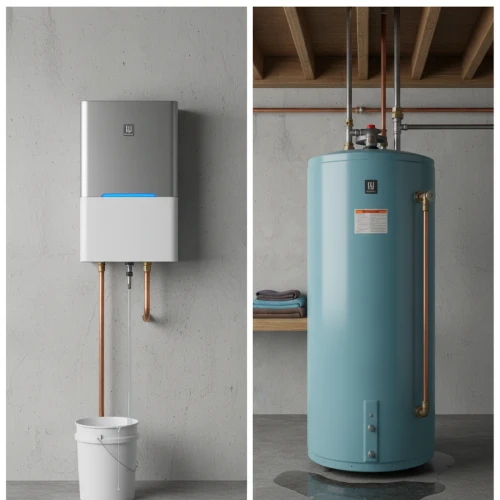
Comparison between traditional tank and tankless water heaters. How to choose the best water heater for your household needs.
Tankless Water Heater vs Traditional Tank: Which Is Better for Your Home?
As one of the most important appliances in the home, the water heater has a big job: Providing enough hot water to ensure the joy of a hot shower, the peace of mind of sanitized dishes, and the convenience of clean laundry.
When it’s time to choose a water heater, homeowners are faced with a major question: Which is better, a tankless or tank water heater? Below is a full breakdown of the pros and cons of each to help you decide which type of water heater is best for your needs.
What’s the Difference Between Tankless and Tank Water Heaters?
Though both types of water heater do the same job, heating up water, there are key differences in how they work, how much they cost, how much maintenance is required, and how long they last.
How They Work
A tank or traditional water heater includes a large holding tank where hot water is stored at all times, ready to go whenever you turn the tap, while tankless water heaters heat the water on demand. Each has its pros and cons depending on your household needs and budget.
Pros of Tank Water Heaters:
- Lower upfront cost
- Simpler installation and maintenance
Cons of Tank Water Heaters:
- Limited hot water supply
- The large holding tank requires a lot of space
- Needs to be replaced every 8-12 years
- Higher monthly energy usage
Pros of Tankless Water Heaters:
- Endless hot water
- 20%-40% lower energy usage
- Compact size and wall-mounted
- Longer lifespan up to 20 years
Cons of Thankless Water Heaters:
- Higher installation cost
- High-use households may require multiple units
Cost Difference Between Tank and Tankless Water Heaters
To accurately measure the cost difference, it’s important to consider ongoing maintenance and utility bills in addition to the upfront cost.
Traditional Tank Water Heater Cost Breakdown:
- Lower upfront cost: $300-$2000
- Simpler maintenance means typically lower costs for repairs
- Higher energy usage
- Shorter lifespan of 8-12 years
Tankless Water Heater Cost Breakdown:
- Higher upfront cost: $1000-$2000
- 20%-40% lower energy usage
- Installation and maintenance can be more complex and costly
- Longer lifespan of up to 20 years
Performance
An unreliable water heater can take the joy out of a hot shower and render the sanitize cycle on your dishwasher ineffective; but a reliable water heater makes the daily routines go smoothly. Because a tank water heater holds a certain number of gallons of hot water at a time, when that hot water is gone you have to wait for more to heat up. In comparison, a tankless water heater never runs out of hot water because the water is heated the moment before it reaches the pipes.
Water Heater Maintenance
With any major home purchase, maintenance and repairs must come into consideration. Water heaters are no different. A traditional water heater requires ongoing maintenance to take care of the holding tank and the many moving parts that keep the water hot, including regular anode rod inspection. In addition, sediment can build up at the bottom, requiring cleaning and flushing. A tankless water heater needs regular descaling to keep it running at peak performance.
* * *
Running the dishwasher, enjoying a shower, bathing kids, washing clothes–hot water keeps the daily routines in your home running smoothly, so choose the right water heater to meet your home’s needs.
Which type of water heater will meet your needs, traditional tank or tankless? Tell us in the comments.